
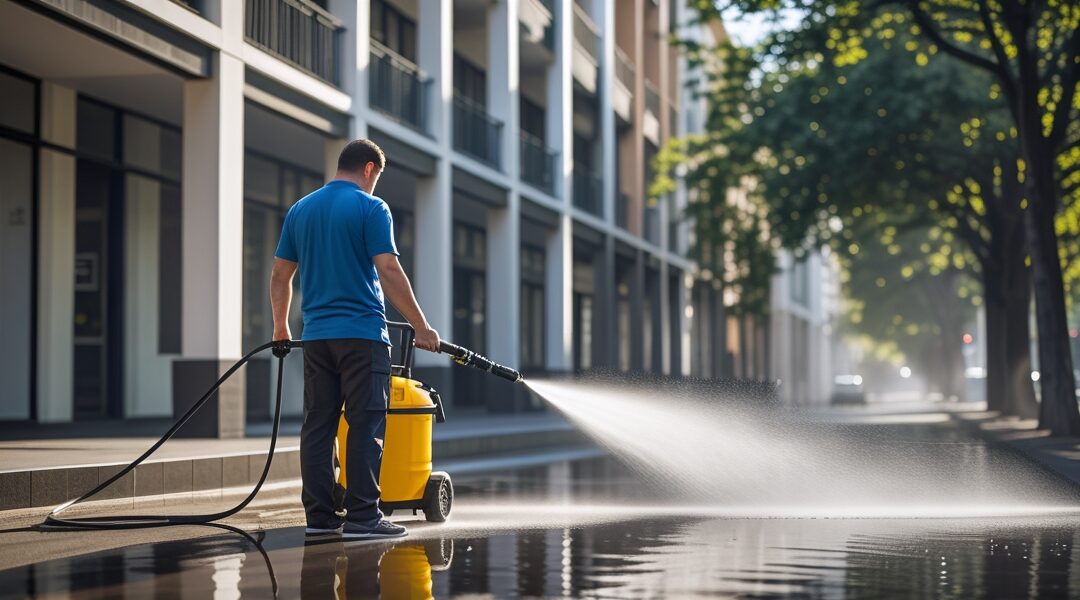
When High-Pressure Washing Can Damage Melbourne Buildings
High-pressure washing (also written as pressure washing) is an effective tool for removing grime, mould, algae and pollution from commercial and residential buildings. However, when used incorrectly or on the wrong surfaces, it can cause significant and sometimes irreversible harm. This guide explains when and why high-pressure washing can damage buildings in Melbourne, what materials are most at risk, legal and safety considerations in Australia, and safer alternatives to protect heritage and modern structures alike.
Why High-Pressure Washing Is Both Useful and Risky
At the right pressure and by trained operators, pressure washing restores appearance, removes biological growths that accelerate decay, and improves safety by reducing slip hazards. The risk emerges when too much pressure is used, the wrong nozzle or technique is applied, or when cleaning is performed on fragile or contaminated materials. The water jet produced by commercial pressure washers can be powerful enough to:
- Erode softer masonry and mortar joints.
- Strip paint or protective coatings from timber, metal and rendered surfaces.
- Force water into joints, behind cladding or into roof structures causing hidden rot and mould growth.
- Disturb hazardous materials such as asbestos, spreading fibres and contamination.
- Create physical hazards from flying debris and cause injury to operators or bystanders.
Materials Most Vulnerable in Melbourne Buildings
Melbourne’s building stock ranges from ornate heritage bluestone and brick to fibro cement roofs and modern rendered façades. Some materials demand particular care:
- Heritage masonry and bluestone: The surface may look hard, but mortar and softer stone layers can be abraded quickly by high-pressure jets, removing original fabric and patina.
- Rendered or painted surfaces: Incorrect pressure or proximity can blister and strip paint or damage the render, exposing substrates to moisture.
- Weatherboard and timber: High-pressure water can gouge grain, remove oil finishes and accelerate decay.
- Fibro cement / asbestos cement sheeting: Critical risk — high-pressure cleaning can delaminate sheets and release hazardous asbestos fibres if present.
- Mortar joints and soft bricks: Pressure can wash out mortar, weakening mortar bonds and structural integrity over time.
- Glazing seals and window frames: Water can be driven behind seals and into sills, causing internal damage.
Common Damage Mechanisms Explained
Understanding how damage happens helps prevent it. The main mechanisms are:
- Abrasion and surface erosion: Repeated high-pressure passes physically remove surface layers, leaving pitting, loss of tooling marks and a rougher surface that retains moisture.
- Water intrusion: High-pressure water can be injected into gaps and cavities. Inside walls, trapped moisture leads to rot, corrosion of fixings and mould growth.
- Coating removal: Paints, sealants and weatherproofing layers can be stripped, exposing substrates to accelerated weathering.
- Structural weakening: Washing out mortar or displacing soft materials reduces load-bearing capacity and can lead to premature deterioration.
- Contaminant spread: For buildings containing asbestos, biological contamination or lead, pressure washing can aerosolise and redistribute hazardous particles.
Regulatory and Safety Considerations in Australia
Australian workplace and environmental regulators require risk assessment and safe systems of work for high-pressure water jetting and cleaning. Key considerations for Melbourne projects include:
- Identifying hazardous materials (for example, asbestos in older fibro cement) before cleaning.
- Using control measures such as containment, negative pressure extraction, or preferring non-abrasive cleaning methods where hazards exist.
- Providing appropriate personal protective equipment (PPE) and training to operators to prevent injuries from the jet stream and flying debris.
- Managing wastewater runoff to avoid contamination of stormwater systems and nearby properties.
- Complying with local council heritage guidelines before cleaning historically significant façades.
If there is any chance that asbestos-containing material will be disturbed, specialist asbestos professionals must be engaged and relevant Safe Work Australia and state regulator requirements followed. Failure to do so risks heavy fines, health hazards and expensive remedial clean-up.
Real-world Examples and Incidents
There have been documented incidents in Australia where improper pressure cleaning caused asbestos contamination and costly remediation, and many DIY attempts have resulted in damaged cladding, stripped paint and water ingress. These events highlight the importance of correct method selection, professional assessment, and conservative settings when cleaning older buildings.
When to Avoid High-Pressure Washing
Avoid high-pressure cleaning in the following scenarios:
- If the material is fragile, soft, painted or historic and the risk of surface loss is unacceptable.
- If asbestos, lead-based paint or other hazardous materials are present or cannot be ruled out.
- If there are gaps, cracks or poor seals that could allow water to be forced into internal cavities.
- On roofs and ceilings where water ingress will be difficult to detect until structural or mould issues appear.
- When local heritage councils or conservation architects advise against abrasive methods.
Safer Alternatives and Best Practices
To protect Melbourne buildings, consider these safer approaches:
- Soft wash systems: Low-pressure application combined with biodegradable detergents tailored to remove mould, algae and organic staining without abrasive force. Soft washing kills biological growth at the root and reduces the need for repeated abrasive cleaning.
- Steam cleaning: High-temperature steam at low pressure can sanitise surfaces and remove grime without the mechanical impact of a jet.
- Hand cleaning and bristle brushes: For heritage façades, manual conservation cleaning by experienced contractors preserves stone surface detail and prevents over-cleaning.
- Test patches: Always perform a small, unobtrusive test area to observe surface reaction and potential damage before full-scale cleaning.
- Consult conservation specialists: For heritage or unusual materials, engage a heritage architect or conservator to advise on appropriate techniques and cleaning agents.
- Controlled pressure and correct nozzles: Use the lowest effective pressure, wider-angle nozzles, and maintain correct distance to reduce impact.
- Water management: Implement containment and appropriate wastewater capture and disposal to avoid environmental contamination and comply with council rules.
Choosing a Professional Contractor in Melbourne
Selecting a contractor with relevant experience, licences and a safety-first approach is crucial. A competent provider should:
- Carry out a documented risk assessment and provide a written method statement.
- Show evidence of training, insurance and familiarity with local heritage requirements where relevant.
- Offer alternatives such as soft wash and conservation cleaning for delicate surfaces.
- Provide references and examples of similar jobs completed successfully.
- Manage hazardous material testing (e.g. asbestos sampling) or coordinate with certified testers where necessary.
If you are assessing options for building cleaning in Melbourne, reputable industry providers will be transparent about when high-pressure washing is the right tool — and when it isn’t.
Middle of Content — Links and Further Reading
For professional services that specify appropriate methods for different substrates, consider licensed contractors who explain when and how to apply each technique. A local provider offering a range of services can guide you to the safest option for your building — for example, a specialist offering both pressure and soft wash services for commercial and heritage properties. See an example service page for more on high pressure washing Melbourne.
For broader industry discussions on commercial cleaning practices and trends, including case studies and best-practice advice, professional cleaning association and company blogs can be useful. An example resource with regular updates is the JAN-PRO blog, which covers commercial cleaning topics and industry standards: JAN-PRO Blog.
Maintenance Frequency and Long-Term Impact
How often a building should be cleaned depends on location, exposure and material. Coastal locations and high-traffic urban sites accumulate salts and pollutants faster, while heritage façades require far less frequent intervention with more conservative methods. Over-cleaning with abrasive high-pressure methods accelerates loss of original material and increases long-term conservation costs. Conversely, appropriately timed and executed cleaning can prolong material life by removing harmful biological growth and deposits.
Practical Checklist Before You Authorise Pressure Washing
- Identify the substrate and determine if it is susceptible to abrasion or water intrusion.
- Check building age and whether asbestos or lead paint might be present — obtain testing if uncertain.
- Request a written method statement and risk assessment from the contractor.
- Confirm contractor insurance, licences and references for similar work.
- Insist on a test patch and allow time to inspect results before proceeding.
- Agree on wastewater containment and disposal procedures to meet local regulations.
- Document any heritage or conservation approvals required by local council and supply them to the contractor.
Summary — When to Use Pressure and When to Step Back
High-pressure washing is a powerful maintenance tool but it is not universally appropriate. Use it on robust, well-sealed hard surfaces like certain concrete and paved areas, but avoid or greatly reduce pressure on heritage stone, timber, painted surfaces and any material that may contain asbestos. When in doubt, choose conservative, low-impact cleaning methods, get materials tested, and work with experienced, insured contractors who follow Australian safety guidance and local heritage requirements.
Further Advice
If you manage a Melbourne building and are unsure whether pressure washing is suitable, commission a professional inspection and materials test. Proper planning and correct method selection will save money, preserve character, and keep occupants safe.
For a quick action plan: if the building is historic, contains unknown sheeting (pre-1990s fibro is a red flag) or shows signs of poor sealing and water-damaged interiors, prioritise testing and soft-clean methods. For robust commercial concrete and paved areas, carefully controlled pressure washing by professionals is usually appropriate.
https://shorturl.fm/cYavp
https://shorturl.fm/8DX0c
Hey, heard about q5betgameapk. Thinking about snagging the APK. Anyone tried it yet? Let me know if it’s worth the download!
https://shorturl.fm/5F2Q7
这篇文章讲高压清洗的风险,tb world 这种清洁方式确实要注意。
https://shorturl.fm/JZnv1
https://shorturl.fm/lRj2V
https://shorturl.fm/Jvoul
https://shorturl.fm/PyU9h
https://shorturl.fm/RrgNV
https://shorturl.fm/OtrGa
https://shorturl.fm/5pH6r
https://shorturl.fm/A2vVI
https://shorturl.fm/yJvJk
https://shorturl.fm/xr4tV
https://shorturl.fm/R3yqG
https://shorturl.fm/9JdAv
https://shorturl.fm/rnjlo
https://shorturl.fm/mb3TV
https://shorturl.fm/tcmTn
https://shorturl.fm/1CcJz
Yo, check out Onebravip! Been having some decent luck there. Super easy to get around the site, and the games are pretty solid. Definitely worth a peek if you’re looking for a new spot to play! Give onebravip a try!
https://shorturl.fm/IFgBV
https://shorturl.fm/Ur9F9
https://shorturl.fm/RlDP1
https://shorturl.fm/bqVgE
https://shorturl.fm/Bhzb9
I found mxn777 recently and I gotta say, it’s got potential. The games run without a hitch. I recommend checking them out: mxn777
Suggestion Cooperage brunch is merely as sinfully Wonderful. I can’t consider adequate of the grits.
These are really great ideas in on the topic of blogging. You have touched some fastidious factors here. Any way keep up wrinting.
Anyone had experience with vipphj.com? I’m curious if it’s legit. Thinking of giving it a shot. Salamat po beforehand! vipphj
Everyone loves what you guys are up too. This kind of clever work and coverage! Keep up the good works guys I’ve included you guys to my personal blogroll.
I’m not sure where you are getting your information, but great topic. I needs to spend some time learning much more or understanding more. Thanks for fantastic info I was looking for this info for my mission.
718betlogin is a solid option if you’re looking for a reliable place to place your bets. Login was easy, the app is intuitive, and I haven’t had any issues withdrawing my winnings. Give it a try: 718betlogin
Been playing on luckypkr1 for a couple of weeks now and I’m enjoying it. The poker action is pretty good, and the community seems friendly enough. Plus, they’ve got some decent bonus offers. Good luck to all: luckypkr1
Gotta say, 900betcasino has impressed me. They have a huge selection of games, and I found some I’d never seen before. The website is easy to navigate and the customer service was helpful when I had a question. Check out the selection here: 900betcasino
Gotta say, 900betcasino has impressed me. They have a huge selection of games, and I found some I’d never seen before. The website is easy to navigate and the customer service was helpful when I had a question. Check out the selection here: 900betcasino
Tried out 27betapp on a whim and I’m actually pretty impressed! Easy to use, good selection of games, and the bonuses are pretty sweet. Definitely recommend checking it out. App download here: 27betapp
5sbet4 is alright. It’s pretty standard but gets the job done. There are other sites that are better, but there are also others that are way worse. If you’re curious give it a shot: 5sbet4
Ahaa, its nice discussion on the topic of this paragraph at this place at this web site, I have read all that, so now me also commenting here.
I will right away clutch your rss feed as I can’t find your email subscription link or e-newsletter service. Do you have any? Kindly let me understand so that I may subscribe. Thanks.
Hey there! Someone in my Myspace group shared this site with us so I came to take a look. I’m definitely enjoying the information. I’m bookmarking and will be tweeting this to my followers! Great blog and great design.
Ahaa, its nice discussion regarding this post here at this website, I have read all that, so at this time me also commenting here.
Everyone loves what you guys are usually up too. Such clever work and exposure! Keep up the superb works guys I’ve added you guys to my own blogroll.
You have made some really good points there. I looked on the net to find out more about the issue and found most people will go along with your views on this site.
Some truly howling work on behalf of the owner of this web site, absolutely outstanding content material.
I wanted to thank you for this fantastic read!! I absolutely loved every little bit of it. I have got you book marked to check out new things you
Thanks for this post, I am a big big fan of this site would like to go on updated.
Ahaa, its pleasant discussion regarding this piece of writing here at this website, I have read all that, so at this time me also commenting here.
It’s very easy to find out any topic on net as compared to textbooks, as I found this article at this web page.
I will immediately seize your rss feed as I can’t find your e-mail subscription hyperlink or e-newsletter service. Do you’ve any? Please let me recognize in order that I could subscribe. Thanks.
I visited multiple websites however the audio feature for audio songs existing at this web page is in fact superb.
You’ve made some good points there. I checked on the web to find out more about the issue and found most people will go along with your views on this site.
I’ll immediately snatch your rss feed as I can’t find your e-mail subscription link or newsletter service. Do you have any? Please allow me recognize so that I may just subscribe. Thanks.
I am sure this paragraph has touched all the internet visitors, its really really nice piece of writing on building up new blog.
It’s very effortless to find out any matter on net as compared to textbooks, as I found this post at this web site.
I am sure this article has touched all the internet users, its really really fastidious post on building up new weblog.
I just could not depart your website before suggesting that I really loved the standard info an individual provide on your guests? Is going to be back incessantly in order to investigate cross-check new posts
Wow! This blog looks just like my old one! It’s on a entirely different subject but it has pretty much the same page layout and design. Wonderful choice of colors!
I am sure this paragraph has touched all the internet people, its really really nice piece of writing on building up new website.
Me777login has an ok selection of games. I like the fast withdrawals compared to others. Give it a shot, here is the link: me777login
Like7777… hmm, interesting name. Looks like some kind of gaming or social platform. Might be worth a look, especially if it has good games. Check it out here if you’re interested. Get liked! like7777
Trying to log into Jili666 can be a bit of a hassle sometimes. Hopefully, this link makes it easier for everyone. Easy Jili access jili666login
Если требуется качественный результат, можно прогон хрумером заказать у специалистов.