
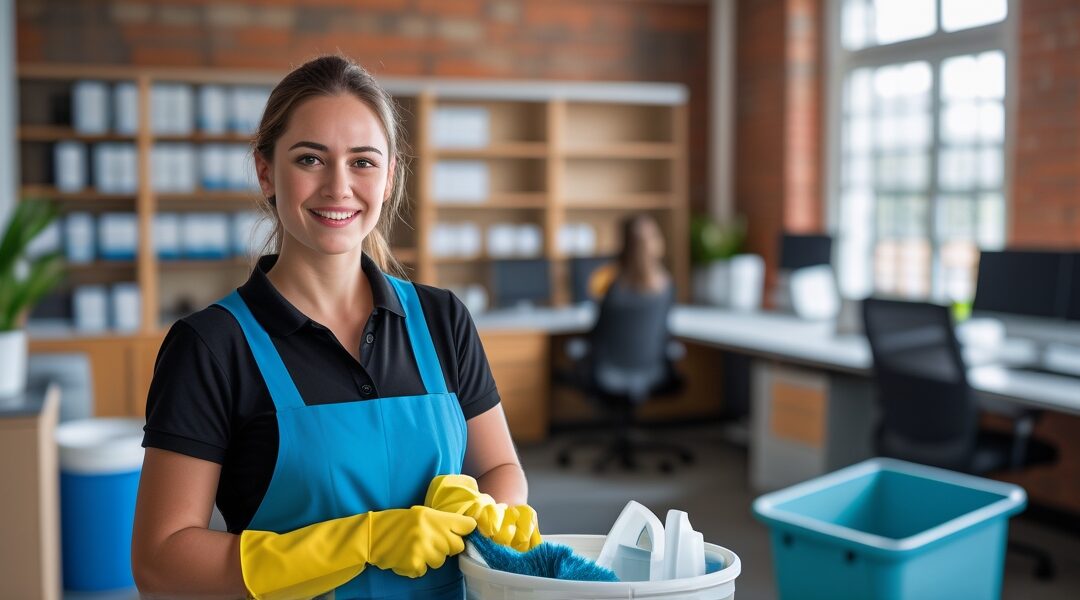
Waste-Reducing Office Cleaning Strategies for Victoria Workplaces
Updated with current Victorian initiatives and practical actions for building a low‑waste, efficient and compliant workplace cleaning programme.
Why waste‑reducing office cleaning matters in Victoria
Offices generate substantial volumes of paper, packaging, food organics and general waste. For Victoria workplaces the shift to a circular economy means cleaning teams and facility managers now play a pivotal role in reducing waste, improving recycling performance and demonstrating leadership under the state’s recent regulations and strategic plans.
Benefits include lower operating costs, reduced procurement and waste‑disposal spend, stronger staff engagement and alignment with Victorian Government goals for recycling and resource recovery.
Key Victorian context and regulations (2023–2025)
Recent Victorian regulatory and policy changes strengthen expectations around waste avoidance and recycling. Key items to be aware of:
- Circular Economy (Waste Reduction and Recycling) Regulations 2023 — introduced frameworks such as the Waste to Energy Scheme and related rules that prioritise waste avoidance and recycling over thermal treatment.
- Victorian Government strategic plans (Recycling Victoria / Strategic Plan 2023–2026) — set targets and guidance that directly affect business and council waste services and recommend improved source separation, organics collection and reuse strategies.
- Risk, Consequence and Contingency Regulations (2023) — add operational and reporting obligations for resource recovery activities, relevant for larger property owners and campus managers.
- Victorian Auditor‑General reporting (2024–2025) — highlighted that government needs to improve recycling performance and that business sectors must also lift diversion efforts to meet state targets.
Facility managers and cleaning contractors should monitor updates on the Victorian legislation site and align contractual KPIs to these policy directions.
Core principles of a low‑waste cleaning programme
Adopt a systems approach — prevention, reuse, repair, recycling and responsible disposal — embedded into daily cleaning tasks and procurement decisions. Practical principles are:
- Avoid generating waste where possible (reduce single‑use items and unnecessary disposables).
- Prefer reusable and durable tools (microfibre cloths, long‑life mops, refillable dispensers).
- Design clear source‑separation systems that are easy for staff and cleaners to follow.
- Use concentrated chemicals and bulk refill systems to minimise packaging waste.
- Measure, report and improve — track diversion rates and adjust operations accordingly.
Practical waste‑reducing cleaning strategies (what to implement)
The following strategies are pragmatic, low‑cost and effective. They are suitable for small offices through to large corporate sites in Victoria.
1. Source separation and clear bin systems
Place clearly labelled bins for recyclable paper, commingled containers, glass and food organics where council services permit. Use colour coding, signage and regular training for staff and cleaners. Track weekly volumes so you can measure diversion improvements.
2. Reduce single‑use items
Eliminate single‑use cups, disposable cutlery and paper towels where hygienically appropriate. Introduce reusable kitchenware or implement a bring your own cup (BYOC) program and provide dishwasher facilities if possible. For hand hygiene, use bulk refill dispensers rather than single‑use sachets or sealed cartridges.
3. Switch to microfibre and reusable cleaning tools
Microfibre cloths and mops clean effectively with less or no chemical, last longer than single‑use wipes and reduce paper towel consumption dramatically. Purchase colour‑coded microfibre sets (to avoid cross‑contamination) and institute laundering schedules.
4. Concentrated chemicals and refill systems
Use concentrated cleaning chemicals with on‑site dilution units or bulk refill stations. This reduces plastic packaging and transport emissions while controlling dosing and cost. Confirm Safety Data Sheets and choose Australian suppliers with refill programmes.
5. Adopt chemical‑minimising technologies
Consider electrolysed water systems, steam cleaning or HEPA vacuum technology for some tasks; these can reduce the need for packaged chemicals and related waste. Evaluate lifecycle costs (equipment, training, energy) prior to investment.
6. Donate and reuse office items
When removing furniture, IT or equipment, use social enterprises or reuse networks that collect and refurbish items for reuse. This reduces bulky waste to landfill and supports community employment programs.
7. Optimise cleaning schedules and occupancy‑based cleaning
Move from fixed‑schedule cleaning to task‑based or occupancy‑driven cleaning where appropriate. This reduces unnecessary product use and energy consumption while keeping high‑touch areas clean.
8. Contractual KPIs and supplier engagement
Embed circular‑economy KPIs into cleaning contracts — e.g., minimum diversion rates, product packaging reduction targets, supplier take‑back programs and reporting requirements. Reward suppliers that demonstrate low‑waste innovation.
Step‑by‑step checklist to roll out a waste‑reducing cleaning programme
Use this practical sequence to implement change in your workplace:
- Conduct a waste audit to understand current streams and volumes.
- Identify quick wins (e.g., remove single‑use cups, install microfibre kits).
- Engage cleaning contractors and procurement teams — include circular KPIs in contracts.
- Install clear bin signage and place bins in high‑use locations.
- Pilot refillable chemical systems and microfibre laundering for one floor or area.
- Measure diversion rates and product use monthly; share results with staff.
- Scale successful pilots across the site and update procurement standards.
Eco‑friendly products and Australian suppliers
Look for local suppliers offering concentrated chemicals, refill stations, durable microfibre kits and serviceable dispensers. Social enterprises such as reuse collection services provide options for office furniture and electronics reuse. When vetting suppliers, request:
- Product Safety Data Sheets (SDS) and environmental credentials.
- Evidence of refill or take‑back programmes to reduce packaging waste.
- Local servicing and laundering options for reusable textiles to reduce transport footprint.
Case studies & examples from Victoria
Real‑world examples in Victoria show the approaches above work:
- Event waste managers implemented reusable cup systems and high diversion programs, reducing landfill to single‑digit percentages at large festivals — strategies that can be adapted for office campuses and events.
- Social enterprises collecting office furniture and equipment (reuse and refurbishment) have diverted large volumes from landfill and provided measurable reuse outcomes for businesses donating surplus items.
- Commercial cleaning providers in Melbourne increasingly advertise microfibre, bulk chemical and low‑waste options to clients responding to environmental and budgeting drivers.
Measuring success — what to track
To ensure continuous improvement track the following metrics monthly or quarterly:
- Waste volumes by stream (kg of general waste, recycling, organics).
- Waste diversion rate (% diverted from landfill).
- Amount of packaging reduced (litres of plastic avoided via refill systems).
- Frequency and cost of chemical purchases (showing reduction through concentrates).
- Staff engagement and training participation rates.
How to involve staff and occupants
Real behavioural change requires staff buy‑in. Use visible signage, induction training, regular updates and a simple rewards scheme for teams who reduce waste the most. Make correct bin use effortless — location, labelling and consistent collection regimes are essential.
Links and resources (for further reading)
The following resources and providers are helpful when planning a transition:
https://www.officepride.com/blog/
Note: the links above are examples of local cleaning service information and industry blogs. Always check supplier claims, ask for SDS documentation and request pilot outcomes before large rollouts.
Common obstacles and how to overcome them
- Perceived cost increases — mitigate by demonstrating lifecycle savings (reduced waste charges, fewer product purchases).
- Behavioural resistance — use simple signage, staff champions and frequent communications.
- Contractor capability — select contractors with demonstrated low‑waste systems and include KPIs in contracts.
- Regulatory complexity — engage a local sustainability advisor or use government guidance to ensure compliance with the Circular Economy rules.
Final checklist for facilities managers in Victoria
Before you start, confirm the following:
- Completed a current waste audit for the site within the last 12 months.
- Updated cleaning contracts to include waste diversion KPIs and product requirements.
- Trialled microfibre and bulk refill systems in a pilot area.
- Established clear, compliant organics and recycling streams aligned to local council services.
- Set measurable targets and a schedule for reporting progress to senior management.
https://shorturl.fm/DtApS
https://shorturl.fm/FRRzc
https://shorturl.fm/KDfgL
https://shorturl.fm/YdDhe
https://shorturl.fm/r8DG0
https://shorturl.fm/gCb5r
https://shorturl.fm/1O8Hz
FCFachai is a new one to me! Had a little play, and it’s got some interesting games. Worth a look if you’re bored with the usual suspects. See what they’ve got at fcfachai
https://shorturl.fm/6aWFO
https://shorturl.fm/bL6Kn
https://shorturl.fm/iLcOh
https://shorturl.fm/1nFcw
https://shorturl.fm/TBGEJ
https://shorturl.fm/99oEk
https://shorturl.fm/4DmOO
https://shorturl.fm/O3dv6
https://shorturl.fm/Tldtv
https://shorturl.fm/eX7I5
https://shorturl.fm/lS20X
https://shorturl.fm/QCpUd
https://shorturl.fm/cJMs3
Yo, logged into 68jilicasinologin yesterday. Login process was smooth, which is a plus. The games loaded quickly, I appreciate that a lot. Good work!
https://shorturl.fm/cSz29
https://shorturl.fm/Hw6A2
https://shorturl.fm/Wj770
https://shorturl.fm/S0235
https://shorturl.fm/7bdbU
https://shorturl.fm/XIBvA
https://shorturl.fm/zzNKZ
https://shorturl.fm/OXiIX
Enter your invite code to earn your airdrop on Aster https://is.gd/ZceEI6
Claim 5% Rebate and Exclusive Bonuses on AsterDEX https://is.gd/CGTnqR
Claim Your Exclusive Bonus on AsterDEX https://is.gd/CGTnqR
Special ability to earn $ASTER bonus https://is.gd/CGTnqR
Fast indexing of website pages and backlinks on Google https://is.gd/r7kPlC
Fast indexing of website pages and backlinks on Google https://is.gd/r7kPlC
Fast indexing of website pages and backlinks on Google https://is.gd/r7kPlC
Hello https://is.gd/tvHMGJ
Hello https://is.gd/tvHMGJ
AI Girls Video
Sign up and turn your connections into cash—join our affiliate program!
Monetize your audience—become an affiliate partner now!
Join our affiliate community and maximize your profits—sign up now!
Join our affiliate program and start earning today—sign up now!
Tap into a new revenue stream—become an affiliate partner!
Join our affiliate community and maximize your profits—sign up now!
Promote our products—get paid for every sale you generate!
Share our products and watch your earnings grow—join our affiliate program!
Refer friends, collect commissions—sign up now!
Join our affiliate program today and start earning up to 30% commission—sign up now!
Drive sales, earn commissions—apply now!
Become our partner now and start turning referrals into revenue!
Earn recurring commissions with each referral—enroll today!
Promote our brand and watch your income grow—join today!
Your network, your earnings—apply to our affiliate program now!
Promote our brand, reap the rewards—apply to our affiliate program today!
Turn traffic into cash—apply to our affiliate program today!
Earn passive income with every click—sign up today!
Become our partner now and start turning referrals into revenue!
Promote our brand, reap the rewards—apply to our affiliate program today!
Monetize your influence—become an affiliate today!
Turn your traffic into cash—join our affiliate program!
Partner with us and enjoy recurring commission payouts!
Earn recurring commissions with each referral—enroll today!
Partner with us and enjoy recurring commission payouts!
Get paid for every referral—enroll in our affiliate program!
Refer customers, collect commissions—join our affiliate program!
Turn traffic into cash—apply to our affiliate program today!
Earn passive income this month—become an affiliate partner and get paid!
Drive sales and watch your affiliate earnings soar!
Start profiting from your network—sign up today!
Partner with us for high-paying affiliate deals—join now!
Your network, your earnings—apply to our affiliate program now!
Earn passive income on autopilot—become our affiliate!
Drive sales, earn big—enroll in our affiliate program!
Earn recurring commissions with each referral—enroll today!
Partner with us and enjoy recurring commission payouts!
Get started instantly—earn on every referral you make!
Start profiting from your network—sign up today!
Earn up to 40% commission per sale—join our affiliate program now!
Join our affiliate program today and earn generous commissions!
Become our partner and turn referrals into revenue—join now!
Start profiting from your traffic—sign up today!
Share our products, reap the rewards—apply to our affiliate program!
Join our affiliate program and start earning today—sign up now!
Join our affiliate community and start earning instantly!
Be rewarded for every click—join our affiliate program today!