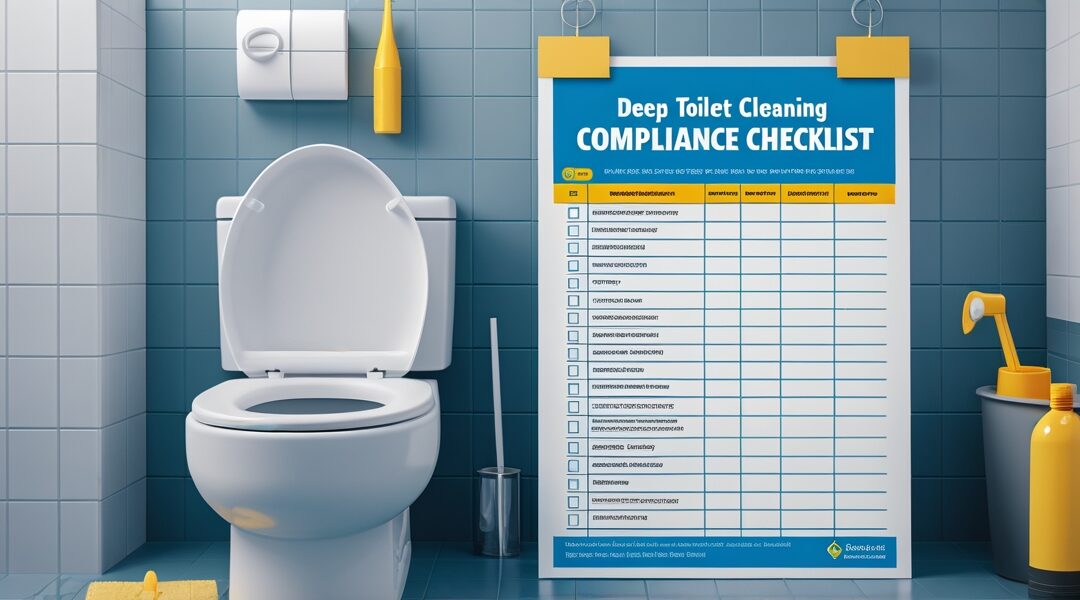
Deep Toilet Cleaning Compliance Checklist — Facility Managers (VIC)
This comprehensive guide helps Victorian facility managers meet statutory obligations and best-practice standards for deep toilet cleaning in commercial, public and healthcare-adjacent environments. It summarises current Victorian guidance (WorkSafe Victoria, Department of Health Victoria), relevant Australian standards and practical checklist items for documentation, PPE, frequencies, chemical use and audits. Use this as a working checklist you can adapt to your site-specific risk profile.
Why deep toilet cleaning matters for Facility Managers in Victoria
Toilet facilities are high-touch, high-risk areas for pathogen transmission and odour complaints. Under the Victorian WorkSafe compliance code for workplace facilities and the working environment, employers must provide adequate, hygienic amenities and manage risks so far as is reasonably practicable. Regular surface cleaning alone is insufficient — scheduled, documented deep toilet cleaning reduces infection risk, prevents maintenance issues and demonstrates duty-of-care during inspections.
Primary compliance sources and standards (summary)
Key guidance facility managers should reference when designing cleaning regimes:
- WorkSafe Victoria — Compliance Code: Workplace facilities and the working environment (requirements for adequate amenities, accessibility and hygiene).
- Victorian Department of Health — Cleaning and waste disposal procedures for infection control (frequency guidance for higher-risk environments).
- Safe Work Australia — Model Code of Practice: Managing the work environment and facilities (cleaning schedules and risk management approach).
- National Construction Code (NCC) Part F2 — Sanitary and other facilities (design and provision standards for new buildings).
- Applicable Australian Standards and product safety data sheets for cleaning chemicals (follow manufacturer directions and COSHH-like controls).
Primary keywords to address in your plans
When documenting procedures and SEO or internal policies, use clear terms and highlight them on your checklists and signage. Primary keywords to include prominently:
- deep toilet cleaning
- toilet cleaning compliance
- facility managers (VIC)
- toilet hygiene audit
Core elements of a compliant deep toilet cleaning programme
A robust programme includes risk assessment, frequency setting, documented procedures, PPE, correct chemical selection, waste handling, and audits. The following sections break these elements down into actionable items.
1. Risk assessment and classification
Classify each toilet block by risk level to determine cleaning intensity and frequency:
- Low risk — staff-only, low foot traffic (e.g. small offices).
- Medium risk — general public-access areas, higher foot traffic (e.g. retail centres, libraries).
- High risk — healthcare, isolation rooms, aged-care proximate facilities, food-prep adjacencies.
Document the classification and review at least quarterly or after any incident (outbreak, plumbing failure, vandalism).
2. Recommended cleaning frequencies
Use these as baseline frequencies; adjust according to risk assessment and local requirements:
- Daily: Routine cleaning (floor mopping, basin and toilet bowl cleaning, refill consumables, graffiti/vandalism checks).
- Weekly: Deep toilet cleaning (descale, grout and tile scrubbing, full fixture disinfection, sanitary bin replacement and exterior pipe inspection).
- Daily to twice-daily: High-risk areas or during outbreaks (follow Department of Health guidance for isolation and healthcare settings — some areas need twice daily or after each use cleaning).
- Monthly: Drain and trap inspection, odour control assessment, ventilation check and lighting checks.
- Quarterly: Full compliance audit and PPE/chemical inventory review.
3. Deep toilet cleaning procedure (step-by-step)
Standardised procedures reduce variability and demonstrate compliance. A typical deep clean should follow a logical sequence to avoid cross-contamination.
- Prepare: Review risk assessment, check signage, isolate area if required, ensure mechanical ventilation is operational.
- PPE: Don nitrile gloves, eye protection, fluid-resistant mask (where aerosols may be created), and impermeable apron. If using high-strength chemicals, refer to manufacturer SDS for additional PPE.
- Remove debris and sanitary waste: Empty sanitary bins and dispose of waste per local collection arrangements.
- Apply descaler to bowls and urinals; allow dwell time per product SDS.
- Clean and disinfect high-touch points: flush levers, taps, door handles, soap dispensers, hand dryers, push plates and grab rails using an appropriate disinfectant with proven efficacy.
- Deep clean surfaces: Scrub tiles, grout and floors with a suitable detergent and disinfectant; use a separate colour-coded mop head and equipment for toilets only.
- Rinse and dry: Rinse surfaces as required and ensure surfaces dry to prevent slip hazards and microbial regrowth.
- Final inspection: Check consumables, test flush and taps, note any maintenance issues, record completion in log.
4. Chemical selection and safety
Choose chemicals that balance efficacy, material compatibility and worker safety. Key points:
- Use disinfectants registered for use in Australia and follow contact time on label.
- Avoid mixing chemicals (e.g. bleach with ammonia) — can create toxic gases.
- Maintain Safety Data Sheets (SDS) and ensure staff training on chemical handling and spill response.
5. PPE and worker safety
PPE protects cleaning staff from biohazards and chemical exposure. Minimum PPE for deep-level cleaning typically includes:
- Gloves (nitrile) — changed between cleaning zones.
- Eye protection if splashing is likely.
- Fluid-resistant mask or P2 respirator when aerosol-generating activities or strong chemicals are used.
- Waterproof apron and closed non-slip footwear.
Ensure staff have access to training, fit-testing for respiratory protection when required, and first-aid arrangements.
6. Documentation and record-keeping
Accurate records demonstrate compliance and support audits. Maintain the following documents:
- Cleaning schedule showing routine and deep clean frequencies.
- Daily/weekly cleaning logs with signatures or electronic verification (time, staff member, completed tasks).
- Incident records for spills, blockages, pest sightings and complaints.
- Maintenance logs for plumbing, ventilation and lighting repairs.
- SDS register and chemical inventory.
7. Waste handling
Sanitary and clinical-type waste must be handled hygienically:
- Use enclosed, lined sanitary bins for feminine hygiene products and ensure frequent removal.
- Segregate sharps or clinical waste and follow health sector disposal rules where applicable.
- Adopt procedures to avoid overflow and odour issues (weekly checks in public toilets are typical).
8. Auditing and continuous improvement
Regular audits ensure standards are maintained and improvement opportunities are identified. Audit items should include:
- Cleanliness scores for fixtures, floors and walls.
- Supply levels (soap, paper, heater or dryer function).
- PPE use and chemical storage compliance.
- Ventilation and odour management performance.
- Staff training currency and SDS availability.
Sample compliance checklist (quick reference)
Use this ordered list on-site or in digital form as a quick compliance snapshot:
- Risk classification for each toilet block documented and dated.
- Daily cleaning log completed and signed.
- Weekly deep toilet cleaning performed and recorded.
- PPE worn and replaced as per policy — checks recorded.
- All chemicals used have current SDS and are stored in a locked cabinet.
- Sanitary bins emptied and serviced and odour control measures applied.
- Maintenance requests logged for leaks, broken fixtures, odour or lighting issues.
- Quarterly compliance audit completed with action items tracked to closure.
Practical tips for facility managers (VIC)
- Standardise cleaning products and equipment across sites so staff move between locations with familiar routines and training.
- Use colour-coded cleaning kits to avoid cross-contamination (toilets: one colour; kitchens: another).
- Consider automatic dispensers (soap, sanitary disposal) to reduce touch points and vandalism.
- Engage with a professional cleaning contractor for complex sites, but retain oversight via documented KPIs and audits.
- During infectious disease outbreaks, escalate cleaning frequency per Department of Health advice and review PPE requirements.
Where to find further practical resources
For detailed operational guidance and contractor options, see reputable industry resources and manufacturer instructions. Two helpful resources to bookmark:
Checklist implementation: step-by-step for the first 30 days
- Day 1–3: Conduct site risk assessment and classify each toilet block. Review current cleaning logs and SDS.
- Day 4–7: Finalise written procedures for routine and deep cleaning; order necessary PPE and signage.
- Week 2: Train cleaning staff on updated procedures, PPE, chemical handling and record-keeping.
- Week 3: Perform first recorded deep toilet cleaning with supervisor sign-off and corrective actions if needed.
- Week 4: Conduct internal audit and update the schedule and resource allocations based on findings.
Common non-compliance issues to avoid
- Lack of documented cleaning schedules or missing logs during inspections.
- Inadequate PPE or lack of training for staff performing deep cleans.
- Incorrect chemical use (wrong dilution or mixing incompatible products).
- Poor waste management leading to overflowing sanitary bins and odours.
- Insufficient ventilation causing persistent odour and humidity problems.
Final notes — demonstrating due diligence
Facility managers in Victoria must balance operational realities with legal obligations. Maintaining documented cleaning schedules, following Department of Health and WorkSafe Victoria guidance, training staff and conducting regular audits are essential steps to demonstrate due diligence. Use this checklist as the foundation for site-specific policies, tailor frequencies to actual use and risk, and ensure you retain records to support compliance activities.
If you need a printable version of this checklist or a customised audit template for multiple properties, let me know the number of sites, your typical foot traffic profile and any sector-specific considerations (healthcare, aged care, retail) and I will prepare a tailored document.
https://shorturl.fm/vh5yx
这个卫生间深度清洁指南对维州物业经理很有帮助,特别是关于charger city driver的细节。
《mr racer car racing》的全球公路赛道和海量车型很有意思,mr racer car racing值得一试。
这篇文章介绍的维州设施经理的深度清洁合规指南很实用,特别是关于the drag racing challenge的部分。
steal brainrot 3d 这个Roblox游戏收集意大利梗动物太搞笑了。
https://shorturl.fm/f7t9P
https://shorturl.fm/LKxpi
https://shorturl.fm/yX9e5
https://shorturl.fm/tD03j
https://shorturl.fm/KlH9p
https://shorturl.fm/2ZlxJ
https://shorturl.fm/70egk
https://shorturl.fm/9M9mh
https://shorturl.fm/pyK6M
https://shorturl.fm/7nf0E
https://shorturl.fm/rmP7z
https://shorturl.fm/IR50f
https://shorturl.fm/Cc6uC
https://shorturl.fm/iIndZ
https://shorturl.fm/DPBpl
https://shorturl.fm/YeEBy
https://shorturl.fm/7NOjN
https://shorturl.fm/3ZOTm
https://shorturl.fm/kz5l4
Alright fellas, gamebetcom seems to be buzzing with activity. Anyone got any inside scoop? Seriously though, any opinions on gamebetcom before I dive in?
https://shorturl.fm/NGFA3
https://shorturl.fm/ukls3
https://shorturl.fm/NyxOU
https://shorturl.fm/p5jED
https://shorturl.fm/A3WCV
https://shorturl.fm/A96bY
Alright guys, took a plunge into betjee777. I must admit I was impressed after registration. Decent odds and smooth interface. Give it a try: betjee777
https://shorturl.fm/OGj85
Ahaa, its pleasant conversation about this post at this place at this weblog, I have read all that, so now me also commenting here.
Dreaming of becoming a superphvip someday! What perks do they even get? Probably just more opportunities to spend money… but hey, a guy can dream, right?
I really like it whenever people get together and share views. Great blog, continue the good work!
It’s very easy to find out any matter on net as compared to textbooks, as I found this paragraph at this web page.
She prefers then offer her those items as birthday gifts once you learn what kind of jewelry.
I will right away take hold of your rss as I can’t in finding your email subscription hyperlink or e-newsletter service. Do you have any? Kindly let me realize so that I could subscribe. Thanks.
I am sure this paragraph has touched all the internet users, its really really fastidious paragraph on building up new weblog.
Glad to be one of the visitors on this awe inspiring internet site :D.
Hola! I’ve been reading your site for some time now and finally got the bravery to go ahead and give you a shout out from New Caney Tx! Just wanted to mention keep up the fantastic work!
I conceive you have observed some very interesting points, regards for the post.
hi!,I really like your writing very much! percentage we keep in touch extra approximately your article on AOL? I need an expert on this area to unravel my problem. Maybe that’s you! Looking forward to see you.
I will right away grasp your rss feed as I can not to find your e-mail subscription hyperlink or e-newsletter service. Do you’ve any? Kindly permit me realize in order that I may just subscribe. Thanks.
I like this post, enjoyed this one appreciate it for putting up.
I am sure this paragraph has touched all the internet visitors, its really really fastidious paragraph on building up new website.
This is a topic that is near to my heart… Best wishes! Exactly where are your contact details though?
Greetings! Very useful advice in this particular post! It’s the little changes that will make the most significant changes. Thanks a lot for sharing!
I wanted to thank you for this fantastic read!! I definitely loved every little bit of it. I have got you saved as a favorite to look at new things you
I am sure this piece of writing has touched all the internet users, its really really pleasant article on building up new website.
Hey! I know this is kinda off topic but I was wondering if you knew where I could find a captcha plugin for my comment form? I’m using the same blog platform as yours and I’m having trouble finding one? Thanks a lot!
These are genuinely impressive ideas in concerning blogging. You have touched some nice things here. Any way keep up wrinting.
If you are going for most excellent contents like myself, only go to see this website every day since it offers feature contents, thanks
Everyone loves what you guys tend to be up too. This type of clever work and coverage! Keep up the amazing works guys I’ve incorporated you guys to my blogroll.
Hi, I do think this is an excellent blog. I stumbledupon it 😉 I’m going to revisit once again since i have book marked it. Money and freedom is the greatest way to change, may you be rich and continue to guide others.